Make College
Pay You.
The Most Expensive Decision You Haven't Calculated.
You're about to make one of the most expensive decisions of your life — and almost nobody is teaching you how to calculate it correctly. College isn't just education. It's a four-year financial positioning window. What you do with that window will determine whether you graduate with debt or graduate with equity.
Most students show up to campus with a backpack, a laptop, and a student loan they don't fully understand. Four years later, they walk across a stage with a degree in one hand and $40,000 in debt in the other. They call it an investment. I call it a missed opportunity.
I've spent 30 years in real estate — buying, selling, mentoring, and coaching. I've watched thousands of young people walk into adulthood completely unprepared for the financial game being played around them. That's why I wrote this book. Not to inspire you. To activate you.
The contrast is stark: graduate with debt versus graduate with equity. One path is the default. The other requires a decision — made right now, before you set foot on campus. This playbook is your blueprint.
The Ownership Mindset
Assets put money in your pocket. Liabilities take it out.

Two Columns. One Decision.
Robert Kiyosaki made it famous. I'm going to make it real for you. Every financial decision you make in college fits into one of two columns: asset or liability. An asset puts money in your pocket. A liability takes money out. That's it. That's the whole game.
The car you're thinking about buying? Liability. The apartment you're planning to rent? Liability. The house you could buy near campus and rent out rooms? Asset. The difference between these two paths, compounded over four years, is the difference between starting your career in a hole or starting it on a foundation.
The 18-Year-Old Wealth Test
Here's a simple test. Look at everything you own and everything you owe. Draw two columns. On the left: things that generate income or appreciate in value. On the right: things that cost you money every month. Most 18-year-olds have nothing on the left. That's not a character flaw — it's a knowledge gap. This book closes that gap.
What do you want your net worth to be at 22? Write it down. Be specific. This number becomes your target — and your decisions between now and graduation either move you toward it or away from it.
Learn More
Capital Before Campus
You can't invest what you haven't saved.
The 40% Rule
Before you can buy anything, you need capital. And capital doesn't appear — it's manufactured through discipline. The rule I've taught for 30 years is simple: save 40% of every dollar you earn. Not 10%. Not 20%. Forty percent. This isn't a suggestion. It's the price of entry into the ownership game.
If you're working part-time in college making $1,500 a month, that's $600 going directly into a savings account that you do not touch. In 12 months, you have $7,200. In 24 months, $14,400. Add a summer job, a side hustle, or a scholarship, and you're approaching a down payment faster than you think.
Income Stacking
Don't rely on one income stream. Stack them. A part-time job provides your base. A side hustle — tutoring, freelancing, reselling, social media management — adds a second layer. Scholarships and grants reduce your expenses, which is the same as earning more. Every dollar saved is a dollar that can work for you instead of against you.
Savings Goal Tracker
Side Hustle Ideas for College Students
The College House Hack
Buy near campus. Live in one room. Rent the others.
The Strategy in One Sentence
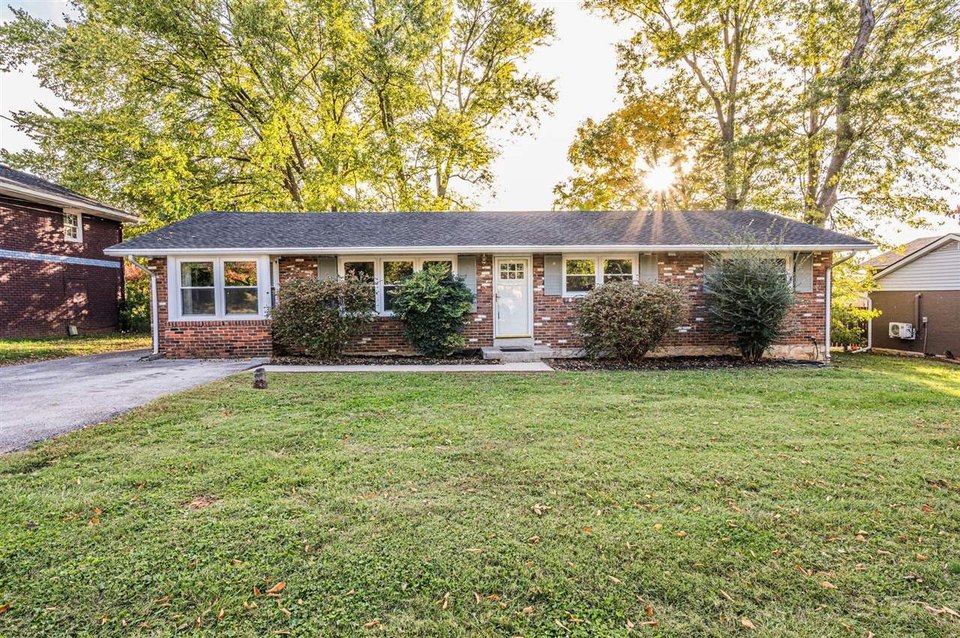
Buy a 3–4 bedroom house within walking distance of campus. Move into one bedroom. Rent the remaining bedrooms to classmates. Their rent covers your mortgage — and then some. You live for free (or close to it) while building equity every single month.
This is called house hacking. It's not a new concept. Investors have used it for decades. What's new is the idea that an 18-year-old college student can do it — because they can. FHA loans allow first-time buyers to purchase with as little as 3.5% down. On a $200,000 house, that's $7,000. You can save that in 12–18 months with the 40% rule.
FHA vs Conventional: What You Need to Know
The Numbers: A Real Example
Let's run a real deal. You find a 4-bedroom house 0.5 miles from campus listed at $195,000. You put 3.5% down ($6,825). Your mortgage at 6.5% is approximately $1,175/month including taxes and insurance. You rent three rooms at $650 each = $1,950/month in rent. After a 5% vacancy buffer, you net $1,852. Your monthly cash flow: $677 positive. Your roommates just paid your mortgage and handed you $677.
Rental Cash Flow Calculator
Operating Like a 19-Year-Old Landlord
Professionalism protects your investment.
You're Not a Friend. You're a Landlord.
This is the hardest part for most young investors. When your tenants are your classmates — people you eat lunch with, go to parties with — the lines blur. Don't let them. The moment you signed that deed, you became a business owner. Treat it like one.
That doesn't mean being cold or transactional. It means being clear. Clear lease agreements. Clear expectations. Clear consequences. The landlords who struggle aren't the ones who are too strict — they're the ones who are too vague.
Tenant Screening Basics
Before anyone moves in, run a basic screening. You're looking for three things: ability to pay (income or parental support), willingness to pay (rental history or references), and respect for property (previous landlord references). For college students, a co-signer — typically a parent — is standard practice and provides additional security.
Landlord Operations Checklist
Maintenance Reserves
Set aside 8% of gross rent every month into a maintenance reserve account. On a $1,950/month rental, that's $156/month — $1,872/year. When the water heater breaks (and it will), you have the cash. Landlords who skip this step end up using credit cards for repairs, which destroys their cash flow and their credit simultaneously.
Using the Tax Code as Leverage
The government rewards real estate investors. Collect your reward.
The Tax Code Is Written for Owners
Here's something they don't teach in school: the U.S. tax code is designed to reward people who own assets and employ capital. As a real estate investor — even a small one — you have access to tax advantages that W-2 employees simply don't. Understanding three concepts will change how you think about taxes forever.
The IRS allows you to deduct the cost of a residential property over 27.5 years — even while it appreciates in value. On a $200,000 property, that's roughly $7,272/year in paper losses that offset your rental income. You collect rent, build equity, and reduce your taxable income simultaneously.
Certain property components — appliances, flooring, fixtures — can be depreciated much faster than the building itself. Through a cost segregation study, you can front-load depreciation deductions in the early years of ownership, dramatically reducing your tax bill in the years when you need cash most.
A cost segregation study is an engineering analysis that identifies property components eligible for accelerated depreciation. For a $200,000 property, this can unlock $20,000–$40,000 in additional first-year deductions. It's an advanced strategy, but worth understanding even at 19.
Income Comparison: With vs Without Real Estate
Scaling Before Graduation
One property is a start. Two is a portfolio.

The Refinance Play
After 12–24 months of ownership, your property has likely appreciated and you've built equity through mortgage paydown. A cash-out refinance allows you to access that equity without selling. You refinance the property at its new, higher value, pull out the equity as cash, and use it as a down payment on your second property. Your first property continues to cash flow. Your second property begins to build equity. This is how portfolios are built.
Milestone Progress Tracker
Reinvesting Cash Flow
Every dollar of cash flow your first property generates should go back into the business — not into your lifestyle. Open a dedicated real estate account. Every month, transfer your cash flow into it. This account funds your maintenance reserves, your next down payment, and eventually your third property. The discipline of reinvesting early is what separates people who own two properties from people who own ten.
Net Worth Tracker
Graduate With Leverage
You're not asking for a favor. You're offering a deal — with a tax advantage they can't ignore.

Flip the Script: You're the Opportunity
Most 19-year-olds go to their parents, grandparents, or a family friend and say, "Can you help me buy a house?" That's the wrong frame entirely. You're not asking for charity. You're not borrowing money as a favor. You are bringing a high-quality real estate investment opportunity to someone who needs exactly what you have — and offering them a seat at the table.
Here's the truth: the One Big Beautiful Bill Act (OBBBA) — signed into law in 2025 — permanently restored 100% Bonus Depreciation for qualifying property placed in service on or after January 20, 2025. That changes the math on your pitch dramatically. A working parent or relative in a higher income bracket doesn't just get the slow 27.5-year drip of standard depreciation anymore. Through a cost segregation study, they can write off 25–30% of the entire property value in Year 1. On a $200,000 property, that's a $40,000–$56,000 deduction in the first year alone. For someone in the 22–32% tax bracket, that translates to $8,800–$17,920 in immediate tax savings. You're not asking them to do you a favor. You're handing them one of the best tax moves available under current law.
The OBBBA Advantage: 100% Bonus Depreciation in Year 1
Under the old rules, depreciation on a residential rental property was spread over 27.5 years — a slow drip of $7,272/year on a $200,000 property. The OBBBA changed that. Through a cost segregation study, an engineer identifies which components of the property qualify as 5-year, 7-year, or 15-year property — appliances, flooring, fixtures, cabinetry, landscaping, HVAC components, and more. Under the OBBBA, those components are now fully deductible in Year 1. Typically 25–30% of a residential property's purchase price qualifies. The building structure itself still depreciates over 27.5 years, but the front-loaded Year 1 deduction is massive.
Now look at what that Year 1 deduction is worth to different partners — versus what it's worth to you as a low-income student:
The higher their income, the more explosive the Year 1 write-off becomes for them. You're not just offering a place to park money — you're offering a tax-advantaged investment with a massive first-year deduction, ongoing cash flow, real estate appreciation, and a built-in exit strategy. That's a compelling pitch to any financially aware adult. The OBBBA made your deal better. Use it.
The Partnership Calculator
Partnership Deal Calculator
How to Structure the Deal
There are two common ways to structure a private money partnership for a college house hack. The first is a co-ownership agreement: both parties are on the deed and the mortgage, splitting equity and cash flow according to their contribution percentage. The second is a private loan: the partner lends you the down payment at an agreed interest rate, you own the property outright, and you pay them back from cash flow.
The Pitch Script
Here's exactly what to say. Practice this until it feels natural.
The Execution Contract
The gap between knowing and doing is everything.
Two Graduates. One Difference.
The Execution Contract
Click each pledge to commit. This is between you and your future self.
Execution Checklist: Before You Start College
Milestone Badges
Click each badge as you achieve it.

Torrey Smith

This book exists because of ten people: Torrey's three children and his seven nieces and nephews. Long before it was a published e-book, it was a conversation at the kitchen table — a father and uncle determined to make sure the young people he loves most enter adulthood with a financial foundation, not just a diploma. It doesn't matter what career they choose. A nurse, an engineer, an artist, an athlete — every one of them deserves to understand how money works, how assets are built, and how to make the years they spend in college work for them instead of against them.
That personal mission is what drives everything Torrey does. With nearly 30 years of experience in real estate, he has seen firsthand what separates people who build lasting wealth from those who spend decades catching up. The answer almost always comes down to one thing: what they did — or didn't do — in their early twenties. Torrey refuses to let the next generation miss that window.
As the Principal Broker of Torrey Smith Realty in Shelbyville, Kentucky, Torrey leads a team of driven agents and mentors them with the same energy he brings to his community work. He has helped revitalize downtown buildings, operates a short-term rental hospitality business, and is the visionary developer behind Stallard Springs — a 600+ acre agricultural neighborhood named after his grandfather, Martin Stallard "Boots" Smith.
A lifelong athlete and coach, Torrey coaches LouCity Youth Soccer and serves as Board Chair of Father's Love, a nonprofit supporting local youth and families. His faith, his church — Christ Community Church — and his family are the foundation of everything. He and his wife Bethany are raising their three kids with the same principles in this book: own things, build equity, and never stop learning.